Section 179 Vehicles: Which Hondas Qualify in 2026
Three Hondas clear the 6,000-pound weight line that the Section 179 deduction turns on. On one of them, the drivetrain you pick decides the answer.
Three Hondas are rated above 6,000 pounds GVWR and qualify as heavy vehicles under Section 179: the Pilot in all-wheel drive at 6,195 pounds, the Ridgeline at 6,019 pounds, and the Odyssey at 6,019 pounds. The front-wheel-drive Pilot, at 5,963 pounds, does not.
- 2026 Section 179 limit
- $2,560,000
- Heavy vehicle cap
- $32,000
- Bonus depreciation
- 100 percent
- Deadline
- December 31, 2026
- Business use required
- More than 50 percent
- Where to buy in Clarksville
- 2655 Trenton Rd, Clarksville, TN 37040
What is the Section 179 deduction?
Section 179 of the IRS tax code lets a business deduct the purchase price of qualifying equipment in the year it is placed in service, rather than depreciating it over several years. Business vehicles count as equipment. For 2026 the ceiling is $2,560,000, which makes this a small and mid-sized business provision.
Normal depreciation spreads a $50,000 vehicle across six tax years. Section 179 pulls that deduction forward into the year you buy. The cash does not change, but the timing does, and timing is the whole point for a business that needs the deduction now.
The rule that decides everything is gross vehicle weight rating, or GVWR. That is the maximum loaded weight the vehicle is rated to carry, and 6,000 pounds is the line. Above it, a vehicle is treated as heavy equipment. Below it, much tighter passenger car limits apply.
GVWR is not curb weight. It is printed on the certification label inside the driver's door jamb of the specific vehicle, and it is the number the IRS cares about. On the Pilot, two versions of the same trim land on opposite sides of that line.
Which Honda vehicles qualify for Section 179 in 2026?
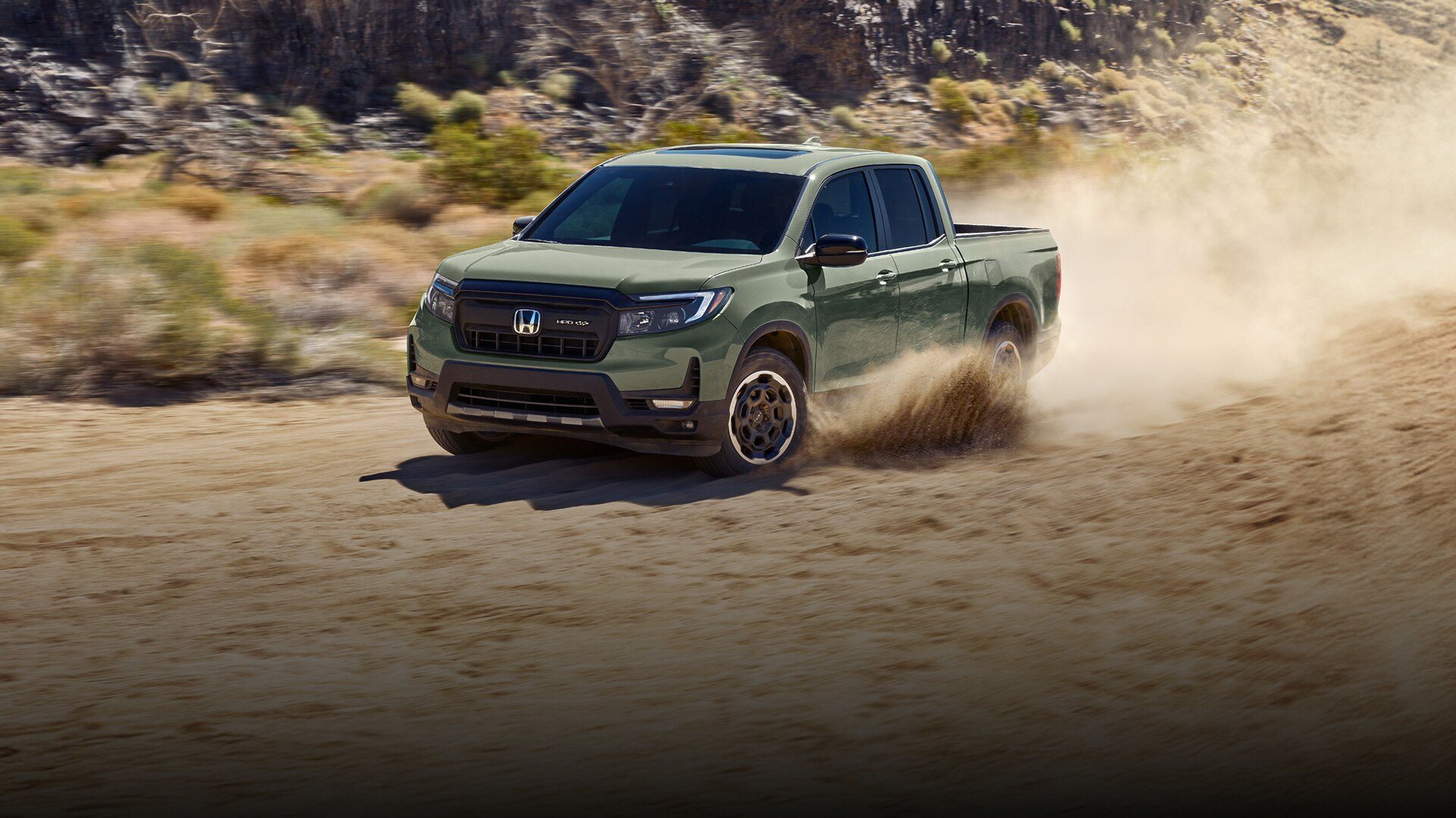
The 2026 Honda Ridgeline RTL AWD (3.5L V6) is rated 6,019 pounds GVWR on every trim. The 2026 Honda Odyssey EX-L FWD (3.5L V6) is rated 6,019 pounds on every trim. The 2026 Honda Pilot EX-L AWD (3.5L V6) is rated 6,195 pounds. All three clear 6,000 pounds and qualify as heavy vehicles.
These three are the ones a Clarksville business buys and writes off: the Ridgeline for trades that need a bed, the Odyssey for moving crews and gear, the Pilot for anyone covering the county in a three-row vehicle. If the Ridgeline is the one you are costing out, our 2026 Ridgeline Section 179 page goes through that truck on its own.
Every one of them sits in the 6,000 to 14,000 pound band, so the $32,000 Section 179 cap applies. None of them escapes that cap, because that exemption needs a cargo bed of six feet or more and the Ridgeline's bed measures 64 inches. The remaining basis can still go to bonus depreciation.
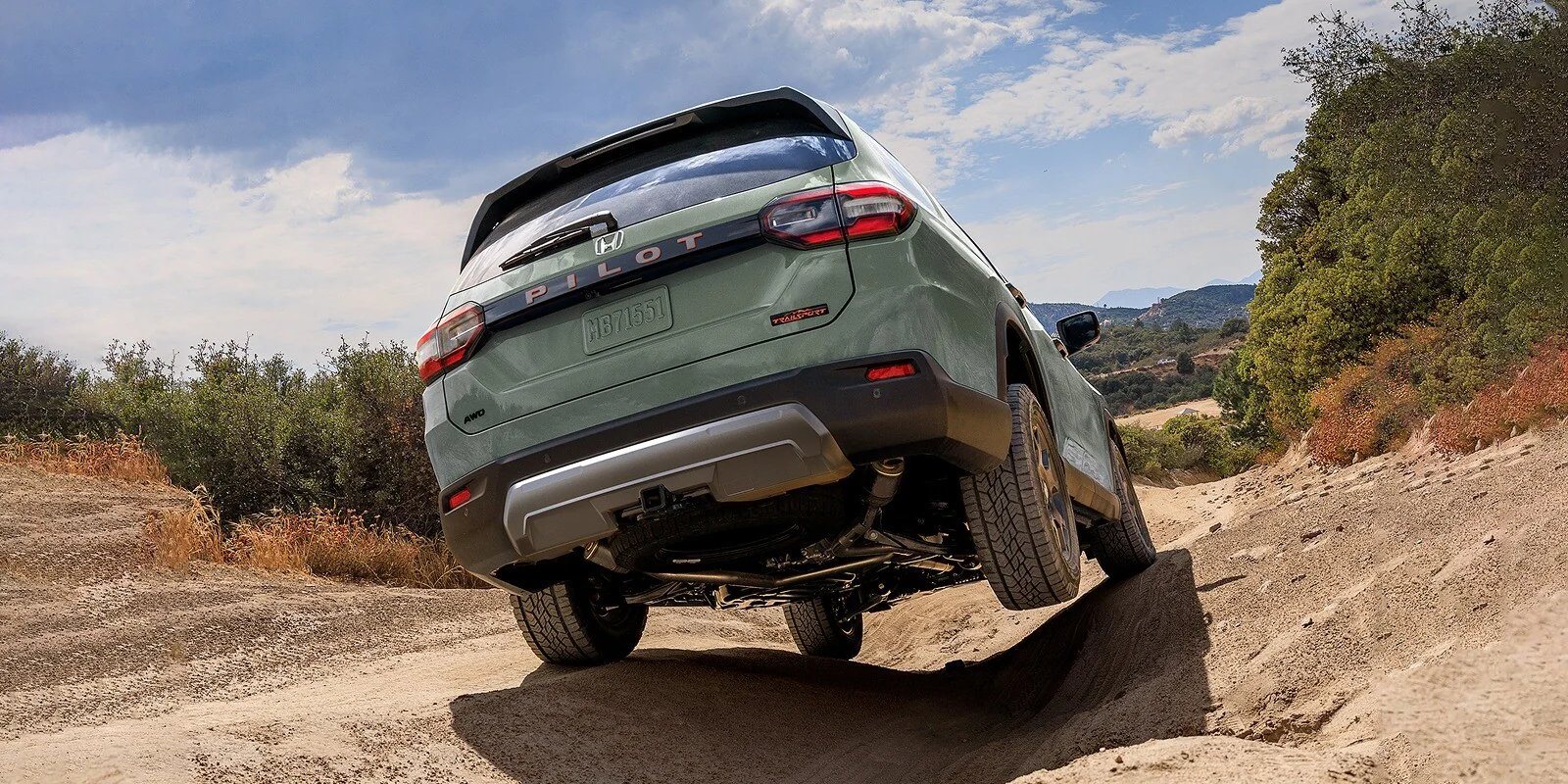
| Vehicle | GVWR | Over 6,000 lbs | Section 179 treatment |
|---|---|---|---|
| 2026 Honda Pilot EX-L AWD (3.5L V6) | 6,195 lbs | Yes | $32,000 cap, then bonus depreciation |
| 2026 Honda Pilot EX-L FWD (3.5L V6) | 5,963 lbs | No | Passenger automobile caps apply |
| 2026 Honda Ridgeline RTL AWD (3.5L V6) | 6,019 lbs | Yes | $32,000 cap, then bonus depreciation |
| 2026 Honda Odyssey EX-L FWD (3.5L V6) | 6,019 lbs | Yes | $32,000 cap, then bonus depreciation |
| 2026 Honda Passport RTL AWD (3.5L V6) | 5,820 lbs | No | Passenger automobile caps apply |
| 2026 Honda CR-V, Civic, Accord and HR-V | Under 6,000 lbs | No | Passenger automobile caps apply |
The Passport is the one people get wrong. It looks every bit as substantial as a Pilot and it is all-wheel drive on every trim, but the 2026 Honda Passport RTL AWD (3.5L V6) is rated 5,820 pounds GVWR. That is 180 pounds short of the line, and the line has no tolerance in it.
A vehicle below 6,000 pounds is not undeductible. It moves to the passenger automobile limits, which cap the first-year write-off at $20,300 with bonus depreciation. For a CR-V or an Accord used in a business, that is often most of what you would have claimed anyway.
Shop the new Pilot inventory, the Ridgeline lineup, or the Odyssey at our Trenton Road showroom.
Why does the Pilot's drivetrain change the answer?
All-wheel drive adds hardware and weight, and that lifts the Pilot's rating from 5,963 pounds to 6,195 pounds GVWR. The 6,000-pound threshold sits between those two numbers. So the same trim, ordered two ways, falls on opposite sides of the Section 179 heavy vehicle rules.
This is a 232-pound difference deciding a five-figure tax outcome, and it is the detail most pages about Section 179 vehicles leave out. Several list the Pilot flatly as a qualifying vehicle. That is right for the all-wheel-drive versions and wrong for the rest.
Which Pilot trims are all-wheel drive
On the 2026 Pilot, the TrailSport, Touring, Elite and Black Edition are built as all-wheel drive only, so each one clears the threshold. The Sport and EX-L are offered both ways, which is where the question actually arises.
If the deduction matters to your purchase, say so before you order. We will confirm the drivetrain and read the GVWR straight off the door jamb label of the specific vehicle, by stock number, before you commit to anything.
What are the 2026 Section 179 dollar limits?
For 2026 the Section 179 deduction limit is $2,560,000, with the phase-out starting at $4,090,000 of equipment placed in service. Bonus depreciation is back at 100 percent. The cap on a heavy vehicle rated 6,000 to 14,000 pounds GVWR is $32,000, which is where the Pilot, Ridgeline and Odyssey land.
| Figure | 2026 amount | What it means for a vehicle buyer |
|---|---|---|
| Section 179 deduction limit | $2,560,000 | The ceiling on everything you expense this year, vehicles and equipment together |
| Phase-out threshold | $4,090,000 | Above this, the deduction reduces dollar for dollar |
| Heavy vehicle cap, 6,000 to 14,000 lbs GVWR | $32,000 | The most Section 179 can take on a Pilot AWD, Ridgeline or Odyssey |
| Bonus depreciation | 100 percent | Covers the basis left after the cap, with no cap of its own |
| Passenger auto, first year with bonus | $20,300 | The limit on a Passport, CR-V, Accord or front-wheel-drive Pilot |
| Passenger auto, first year without bonus | $12,300 | The same vehicle if bonus depreciation is not elected |
The return of 100 percent bonus depreciation is the part worth reading twice. A heavy vehicle is often described as "capped at $32,000," which is only half true. Section 179 stops at $32,000, and bonus depreciation can then take the remaining basis. For a business at full use, the practical result is frequently a full first-year write-off anyway.
Section 179 is also limited by your taxable business income. You cannot use it to create a loss. Bonus depreciation can, which is one of several reasons the two interact in ways worth running past an accountant before you buy.
What does "placed in service by December 31" actually mean?
Placed in service means the vehicle is delivered to you and actually being used in your business, not merely ordered or paid for. A vehicle bought on December 20 that arrives January 8 is a 2027 deduction. For Section 179 in 2026, it has to be working by December 31, 2026.
This is where year-end purchases go wrong. Payment date is not the test. Possession and use are. Financing does not hurt you here either: a business can finance a qualifying vehicle and still deduct it under Section 179 in the year it is placed in service.
From today that leaves roughly two months. Vehicles in stock at 2655 Trenton Rd can be delivered inside that window. A factory order for a specific Pilot trim and drivetrain is the one to watch, because build and transit time can run past the deadline.
Call 931-630-0055 and we will tell you what is genuinely deliverable before year end. You can also start a finance application or contact the team with a stock number.
We sell cars. We do not give tax advice.
Jenkins & Wynne Honda is not a tax advisor and nothing on this page is tax advice. Section 179 rules, dollar limits and weight thresholds are set by the IRS and change from year to year. Figures here were current as of October 30, 2026.
Eligibility depends on your business, your entity type and how the vehicle is used. Confirm your situation with a certified public accountant before you buy, and confirm the GVWR on the door jamb label of the specific vehicle. See IRS Publication 946 for the governing rules.
Section 179 questions we hear from Clarksville business owners
Does the Honda Pilot qualify for Section 179?
It depends on the drivetrain. The 2026 Honda Pilot EX-L AWD (3.5L V6) is rated 6,195 pounds GVWR and clears the 6,000-pound threshold. The front-wheel-drive Pilot is rated 5,963 pounds and does not. TrailSport, Touring, Elite and Black Edition are all-wheel drive only, so they clear it.
Does the Honda Ridgeline qualify for Section 179?
Yes. The 2026 Honda Ridgeline RTL AWD (3.5L V6) is rated 6,019 pounds GVWR on every trim, which clears the threshold. Its bed is 64 inches, under the six-foot mark, so the $32,000 heavy vehicle cap applies rather than a full first-year expensing.
Does the Honda Odyssey qualify for Section 179?
Yes. The 2026 Honda Odyssey EX-L FWD (3.5L V6) is rated 6,019 pounds GVWR across all trims. For a business that moves crews, clients or equipment, it is treated as a heavy vehicle and is subject to the $32,000 Section 179 cap, with bonus depreciation available on the balance.
Does the Honda Passport qualify for Section 179 as a heavy vehicle?
No. The 2026 Honda Passport RTL AWD (3.5L V6) is rated 5,820 pounds GVWR, which is below the 6,000-pound line. It is still deductible for business use, but under the passenger automobile limits of $20,300 in the first year with bonus depreciation rather than the heavy vehicle rules.
Do I have to take delivery before December 31?
Yes. The vehicle must be placed in service, meaning delivered and actually used for your business, by December 31, 2026. Paying in December for a vehicle that arrives in January moves the deduction into the 2027 tax year. Order timing matters more than payment timing.
How much business use does Section 179 require?
More than 50 percent of the vehicle's use must be for your business. The deduction is then scaled to that percentage. A vehicle used 70 percent for the business claims 70 percent of the figure. Keep a mileage log, because business use is what gets examined first.
Does a used Honda qualify for Section 179?
Yes. Section 179 applies to new and used vehicles, as long as the vehicle is new to your business and is not bought from a related party. A used Ridgeline or Pilot from our Clarksville lot can qualify on the same terms as a new one, judged on its own door jamb rating.
Where to find Jenkins & Wynne Honda in Clarksville
Jenkins & Wynne Honda has been at 2655 Trenton Rd in Clarksville, TN since 1946, which makes it the oldest car dealership in the city. We sell to households and small businesses across Montgomery County, Fort Campbell, Hopkinsville and the Nashville metro.
- Address
- 2655 Trenton Rd, Clarksville, TN 37040
- Sales
- 931-630-0055
- Service
- 931-263-5045
Every new vehicle we sell plants 11 trees through The Jenks Project, and every sale carries our 48-hour return guarantee. More on why people buy here.
Two months left to put a vehicle to work in 2026
Tell us what the business needs and we will confirm the drivetrain, read the GVWR off the door jamb label and tell you whether we can have it delivered before December 31. No obligation, and no tax advice, just the number on the sticker.
Shop New Inventory Call 931-630-0055